
Bed Bug Pest Control
Bed bugs have become a significant problem around the world. They are easy to spread and difficult to treat, resulting in a rapid increase in bed bug outbreaks. Many people associate bed bugs with public places such as hotels or cinemas, not realising they can just as easily be transported into your own home. If you have an active bed bug infestation, it is key to get rid of them as quickly as possible. The frustration they can cause is not only from the emotional stress of dealing with these parasites, but also the constant irritation of their bites and sleepless nights.
At Fine Link we provide a full range of targeted bed bug solutions, suitable for use in a variety of different environments. With access to a wide range of bed bug control solutions, we can offer quick response times and innovative treatments for your home or business.
It isn’t always easy to identify bed bugs or know there’s a problem. They remain hidden in tiny cracks and crevices during the daytime. Often the first sign of bed bugs is bites that appear on your body after you wake up.
Common Signs
It’s difficult to confirm the presence of bed bugs just by looking at your bites.
Look for these clues to their presence:
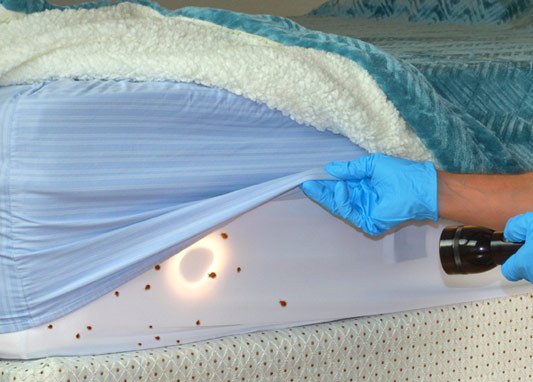
- Dark/black stains – on the mattress and surrounding area from bed bug excreta.
- Sweet scent – An unpleasant, sweet, sickly scent.
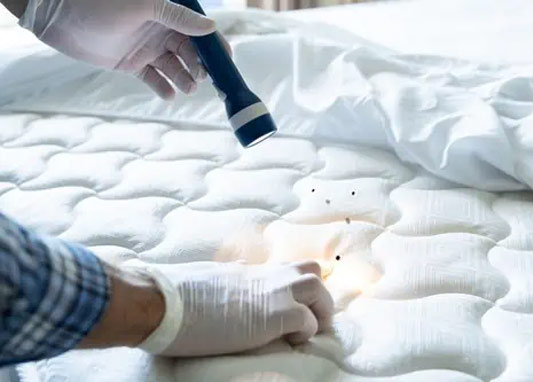
- Small dark spots – Small dark blood spots on bedding known as ‘faecal spotting’.
- Live insects – despite being small (adults are only 4-5mm long) it’s possible to spot live bed bugs and shed skins.
Bed bugs can be difficult and costly to control. It’s important to act as soon as you have noticed evidence of activity.
Locating Bed Bugs
Although your bed is the first place to check, bed bugs can also hide in furniture and furnishings including:
- Bed frames and headboard crevices
- Mattress seams
- Carpets and underlay
- Skirting boards
- Between timber floorboards
- In cracked or broken plaster, behind peeling wallpaper
- Inside electrical sockets and fittings
- Drawers and cupboards
- Wardrobes
- Bedside cabinets
Bed bugs are usually found in bedrooms and sleeping areas because they need easy access to a bloodmeal at night. They are also attracted to bodyheat and carbon dioxide from our breath.
How Do Bed Bugs Spread?
They’re usually carried into a home or business on clothing, or in luggage or furniture. Given their size, bed bugs are well adapted to travel.
Second hand / vintage furniture
- Second hand furniture can also harbour bed bugs. Carefully inspect for signs of infestation before taking items home, especially cracks and crevices. Rentokil can treat items before you bring them into your home.
Staying away in an overnight accommodation
Spending a night in a hotel with an infestation is the most common way of spreading bed bugs.
- Check for blood spotting on bed linen and other common signs in your hotel room when you arrive.
- Inform hotel management if you have suspicions.
- It may be necessary to launder, fumigate or treat belongings before returning home to ensure they are free from bed bugs.
Visiting friends and neighbours
If your home has bed bugs, don’t risk spreading them by taking clothes, suitcases or furniture to hotels or people’s homes.
Established bed bug infestations can migrate to adjoining properties by crawling through wall or floor cavities. If you live in a flat, apartment or terraced house, inform your neighbours and other tenants to take action quickly.
Preventing Bed Bugs
It’s not just the bites that make you feel uncomfortable if you have an infestation of bed bugs. But the simple fact is that it can be very easy to bring bed bugs into your home or work place without realising it. Rest assured, an outbreak does not reflect on your standards of cleanliness in any way.
Bed Bug Prevention Tips
Here are a number of simple steps you can take to reduce your chances of facing an unwelcome outbreak of bed bugs:
At Home
- Wash and dry clothes at the highest possible temperatures.
- Eliminate clutter in your house to give bed bugs fewer places to hide.
- Avoid spreading bed bugs to your friends and family by not taking any clothes, suitcases or furniture to their homes.
- Tidy all areas of your bedroom, especially the floor around/underneath your bed and bed-side cabinets.
- Vacuuming can greatly reduce the size of the bed bug population, but only when they’re clearly visible. It cannot guarantee total elimination. (Empty and clean the vacuum to avoid transferring eggs to other rooms.)
When Travelling
- Check hotel bed linen and mattresses for live bed bugs, small dark bloodspots and a distinctive sweet and sickly smell.
- Avoid putting your suitcase on the bed.
- Hang clothes in a wardrobe rather than use drawers.
Store suitcases in the garage between trips.